Hockey Development
Intelligent. Adaptable. Confident. Daily development built around how players actually see, process, and play the game.
Play faster — through thinking the game faster. Transferable skills and game concepts that create time and space — for the player, and for the teammates around them. Every one of them moves through the same four-stage progression, from clean technique to real execution in the chaos of a game.
Our Top Priority
To inspire — and grow every student's love, passion, and confidence.
Everything else we do is built on top of that.
Developed by People Who Played
Every practice plan, video session, and gym block is run by a staff that lived the pathway.
How Development Actually Happens
Students have to enjoy the training — and understand how and why it benefits them — at the same time. When training is fun AND clearly helping them, you get engagement, buy-in, and focus. That's where development and confidence grow.
Fun + Knowing the Why
Training students genuinely enjoy — with a clear understanding of how and why every rep benefits their game.
Engagement • Buy-In • Focus
Students who want to be on the ice, believe in the work, and lock in — because the training is theirs, not something done to them.
Development & Confidence
Real growth — in skill, in game intelligence, and in the confidence that carries into everything a student does.
The On-Ice Development Progression
Every skill travels the same four stages — from unopposed technique to game execution.
Blocked Training
One specific, transferable skill. High focus on technique, form — and the when, where, why. Coaching solely on the skill.
Video examples: seeing it done properly in a high-level game — and why it's important to master.
Layered Training
Skills from blocked training, layered into one working sequence between players. Same form. Same technique. Now connected.
Tactical Training
A high-frequency game situation — the opportunity to utilize the skill from blocked training, now with pressure and/or decision making involved.
Free Play — Rules & Restrictions
A small-area game with rules and/or restrictions that create opportunities to use the skills — never required. Do they see it? Can they execute under pressure — with the same form, habits, and technique — consistently?
Coaching here is limited, on purpose: "Don't give the answer to the test."
It's a class.
The ice sessions are not overly taxing physically — more mental than physical. More learning than physical working.
The extra ice time is nothing more than an opportunity — there is a certain level of focus and attention to detail required for it to help the player.
Every rep matters.
One Skill, Through the Whole System
How a single skill — the backhand hook pass — travels the full progression.
01 — Blocked Training
Example 1: Can the player properly make a backhand hook pass, from the puck being loaded on their outside hip?
Example 2: Can the player properly gain full control of a puck on the yellow, on their backhand side?
Example 3: Shooting off the pass — forehand only, stop and shoot.
02 — Layered Training
Player 1: properly gain full control of the puck quickly on the yellow, on their backhand side — and properly execute a backhand hook pass to the interior… to Player 2: can they stop and shoot?
03 — Tactical
The same sequence inside a high-frequency game situation — now with pressure and decisions attached to every touch.
04 — Free Play
A small-area game where the hook pass to the interior is there to be found. Does the player see it? Do they execute it — with the same technique — consistently?
How We Evaluate Players
Are players having success because they are seeing the game, making correct decisions, and playing a style of play that will transfer as they move through youth hockey and beyond? Or are they having success because of a current advantage — size, speed, individual skill — that will not transfer once those gaps close within their peers?
We evaluate for what transfers. Then we train it — every rep, every day.
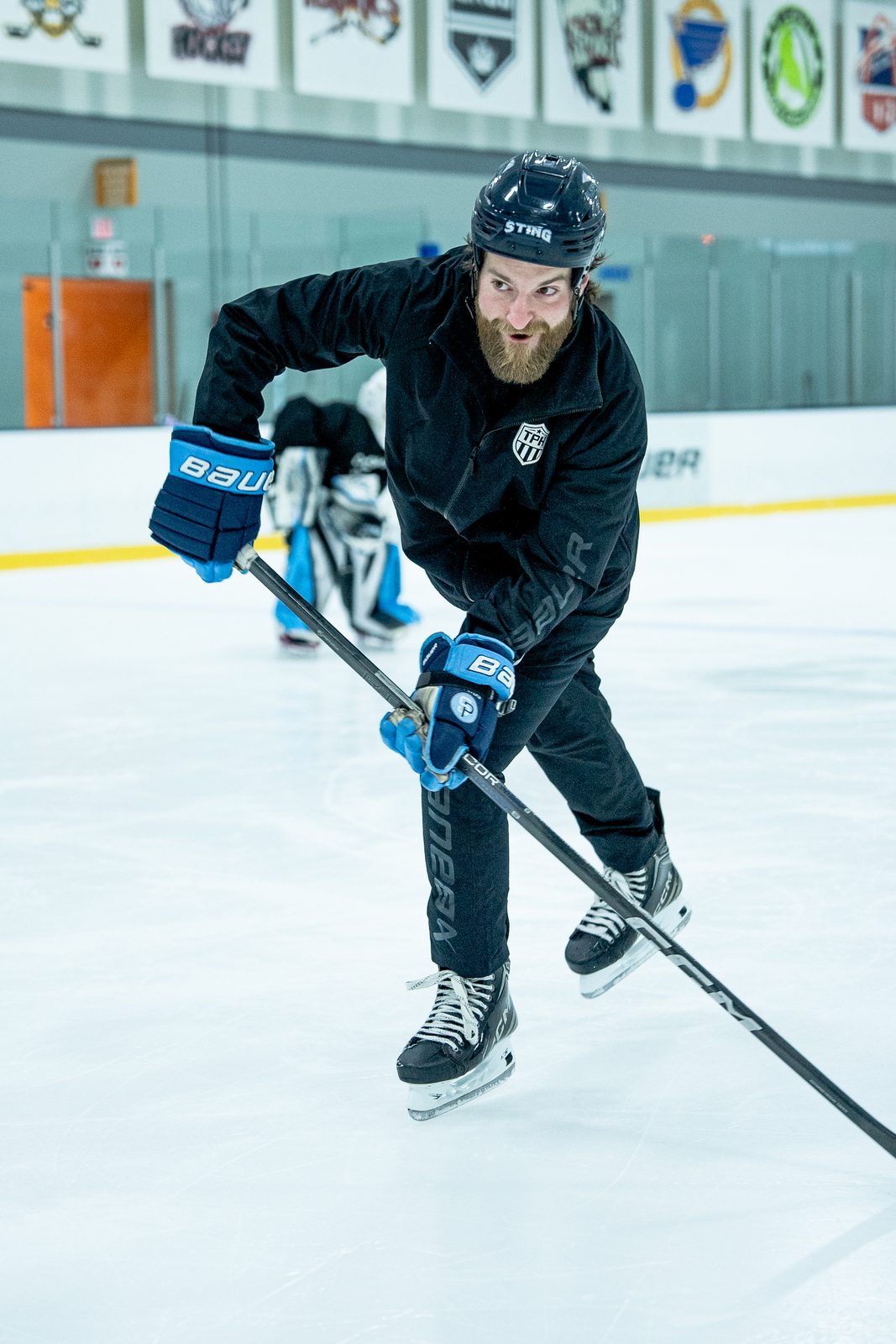
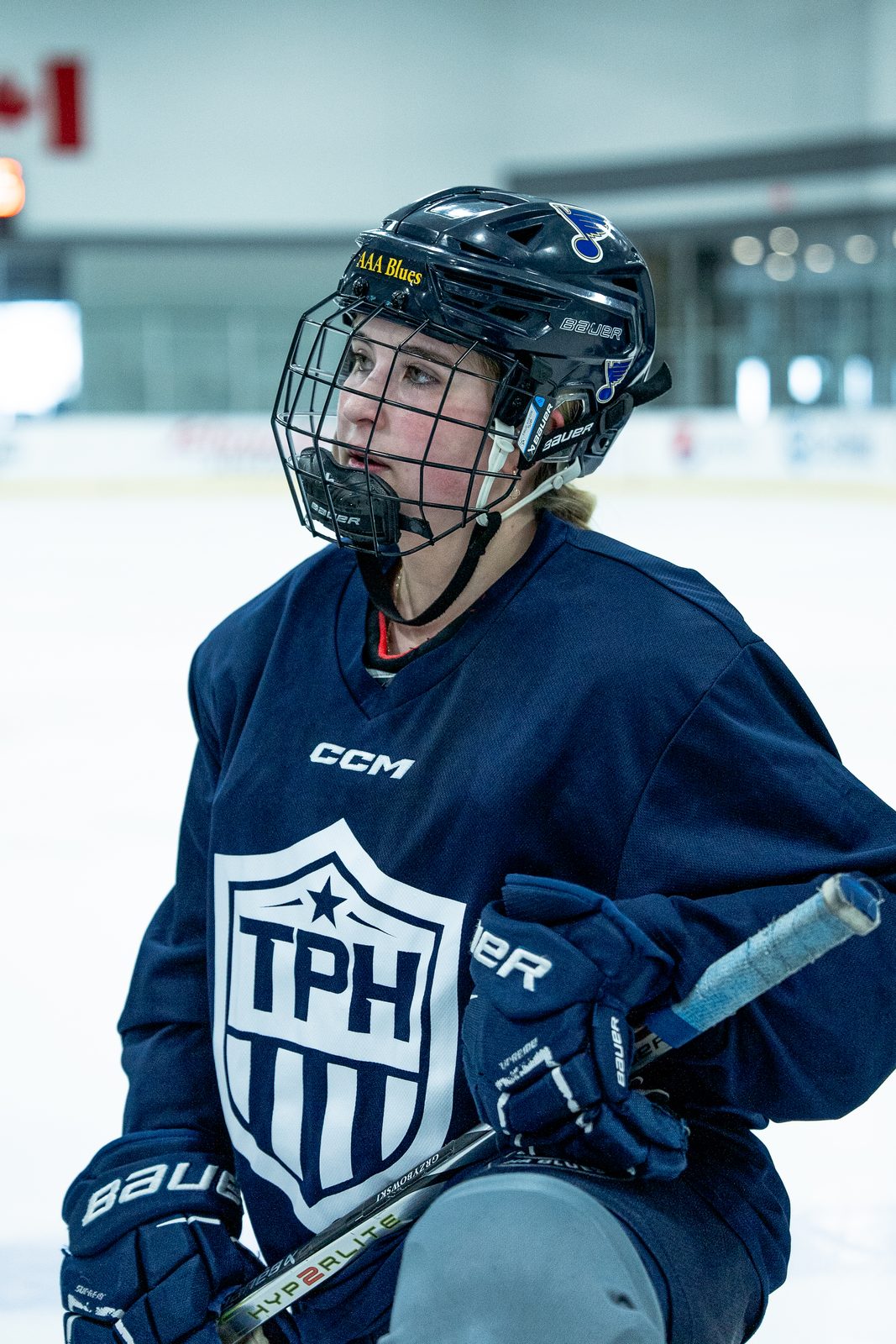
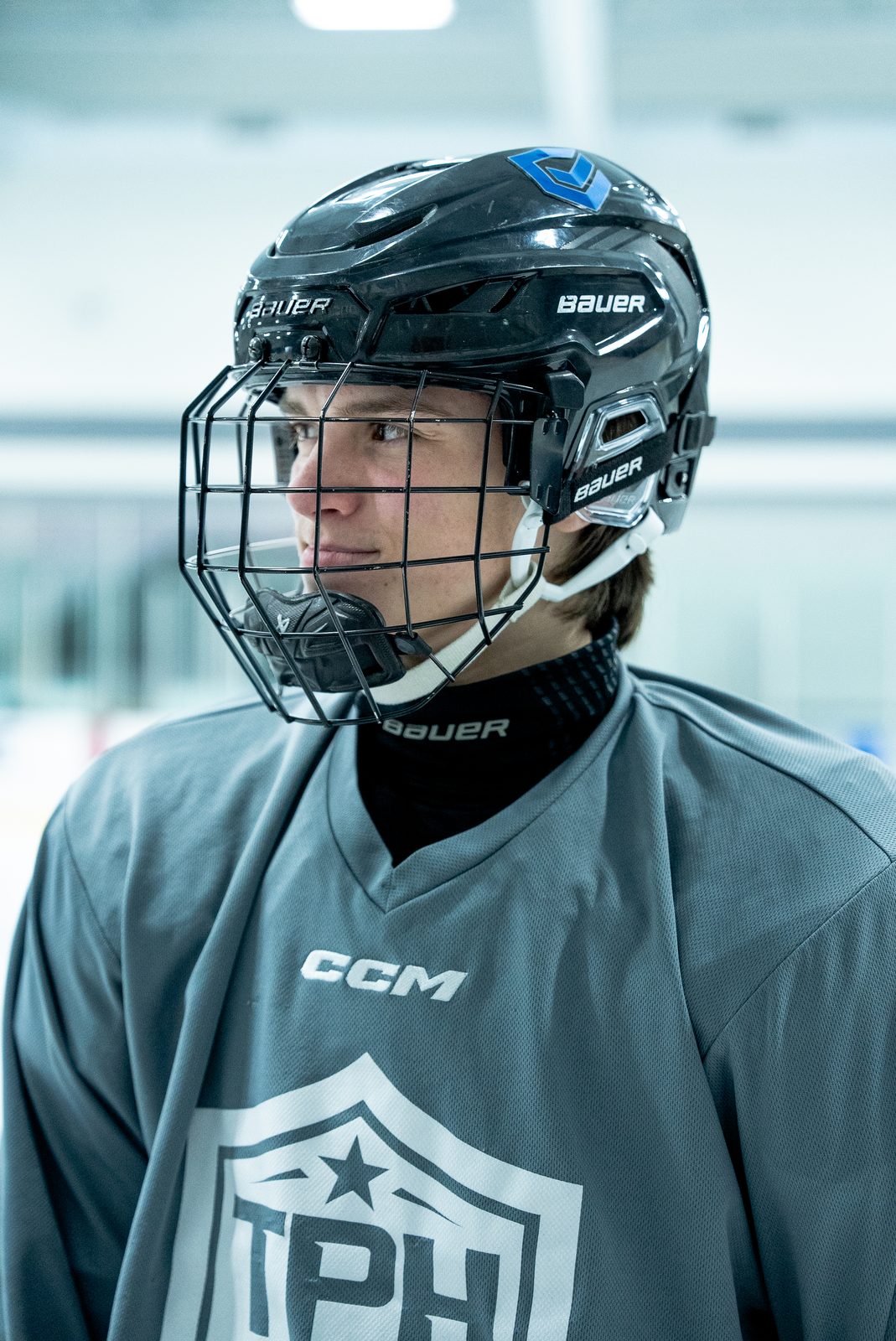
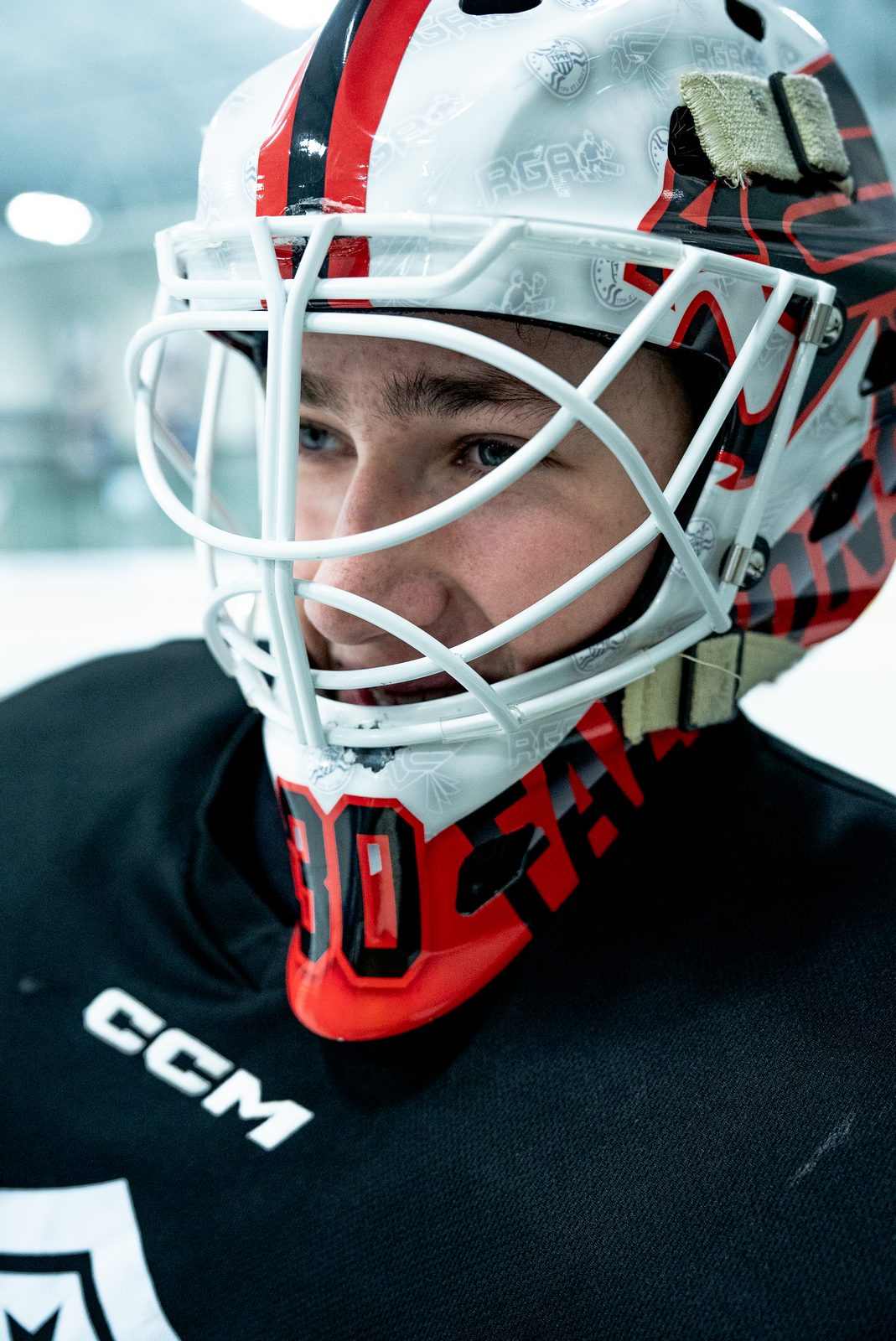
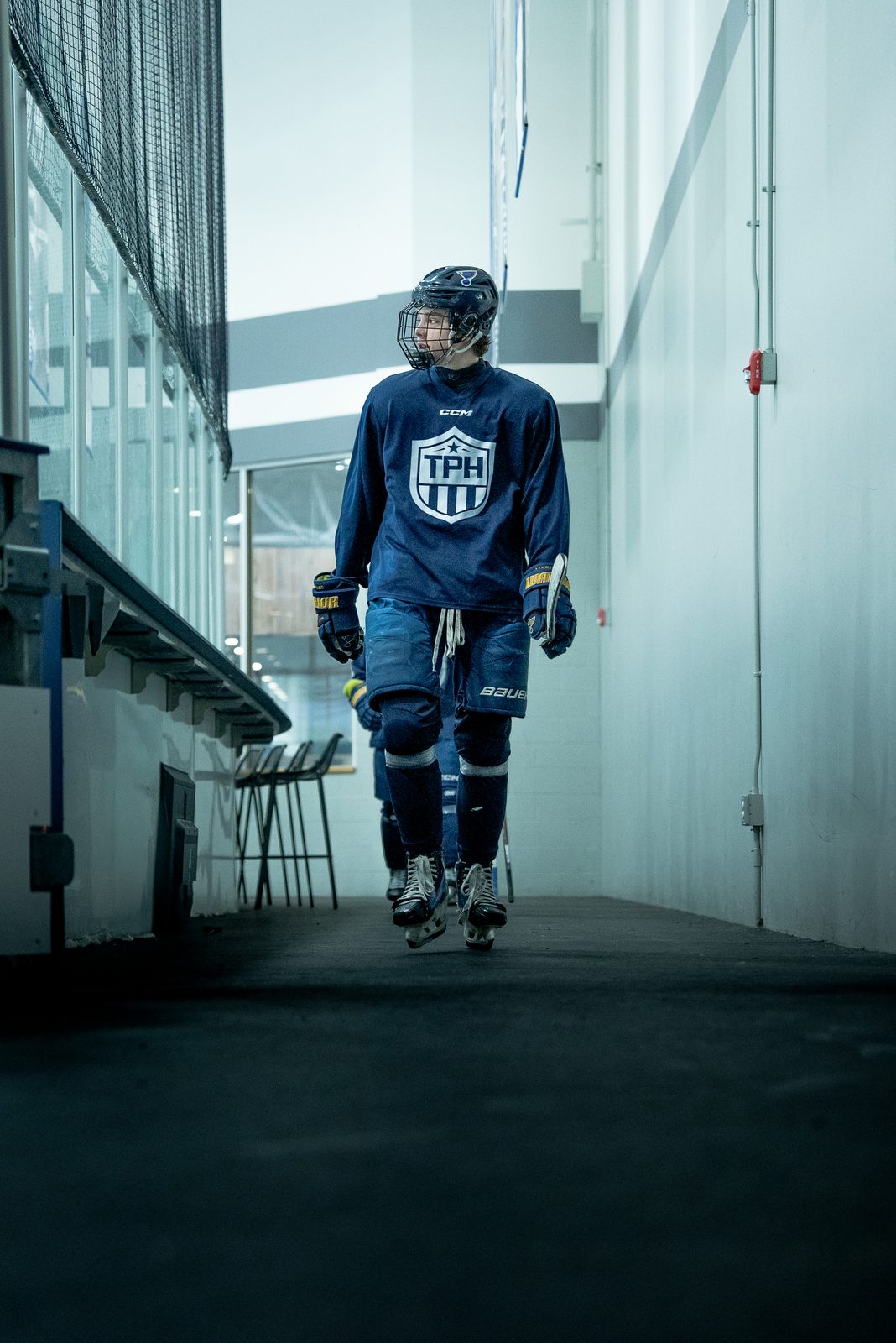
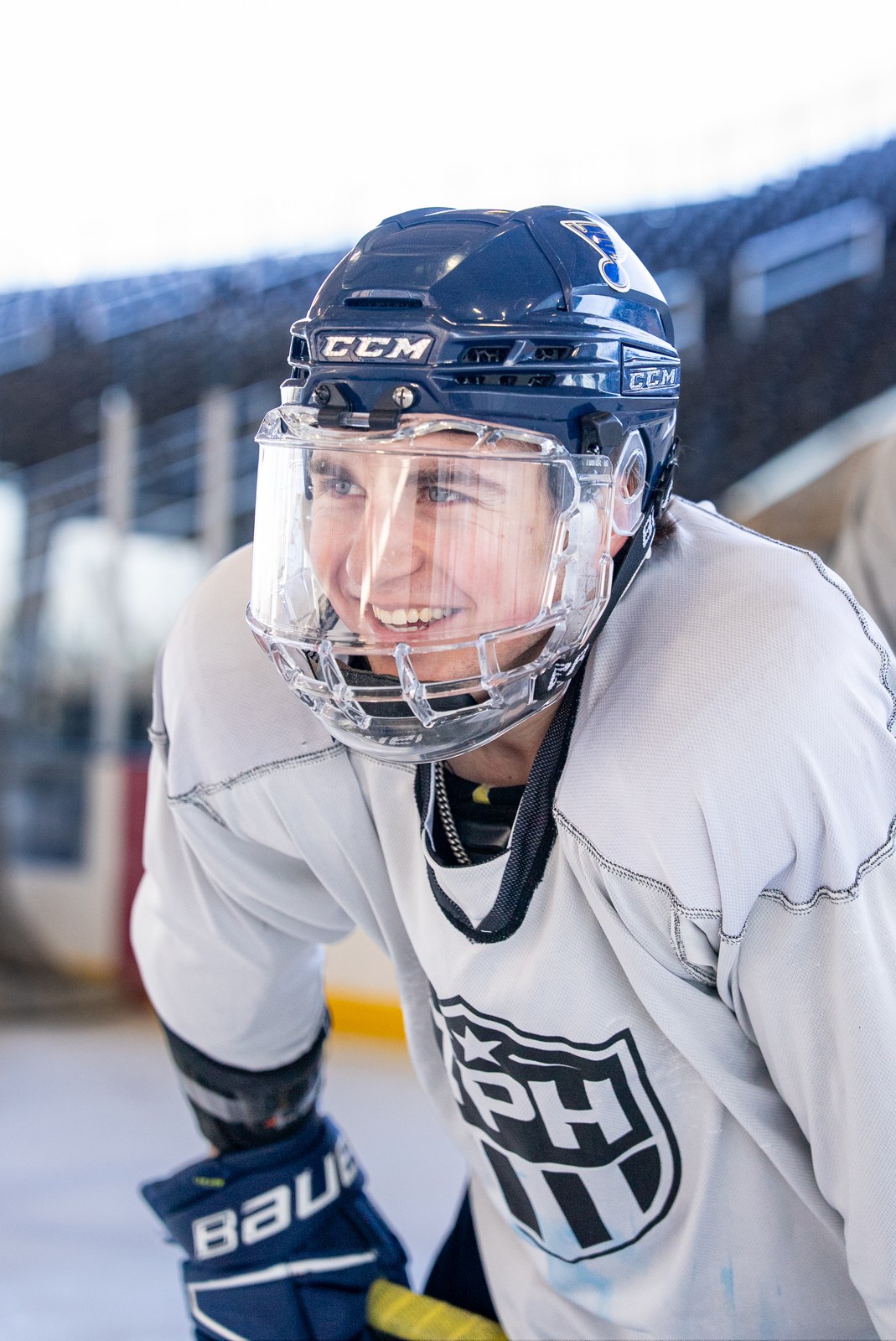
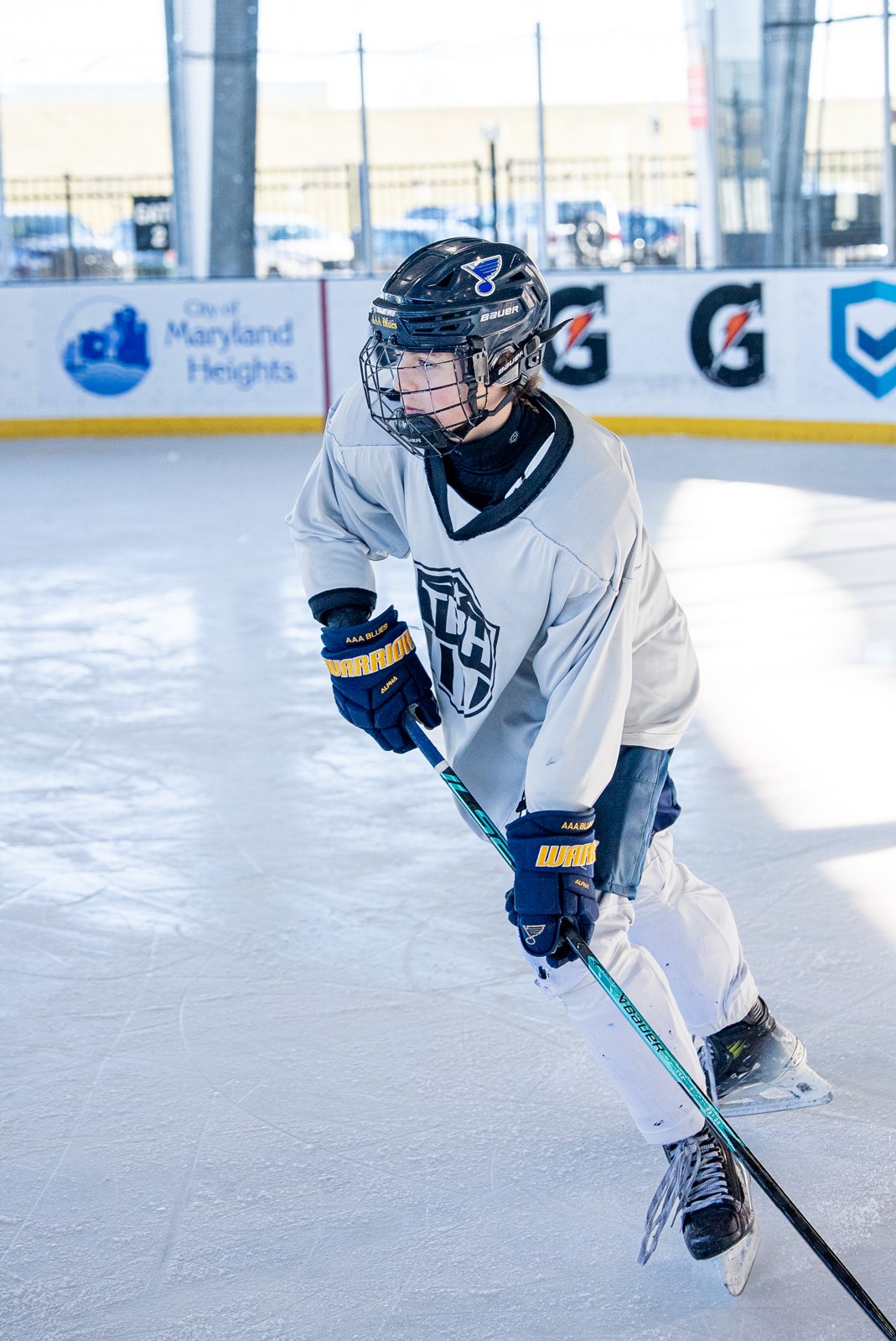
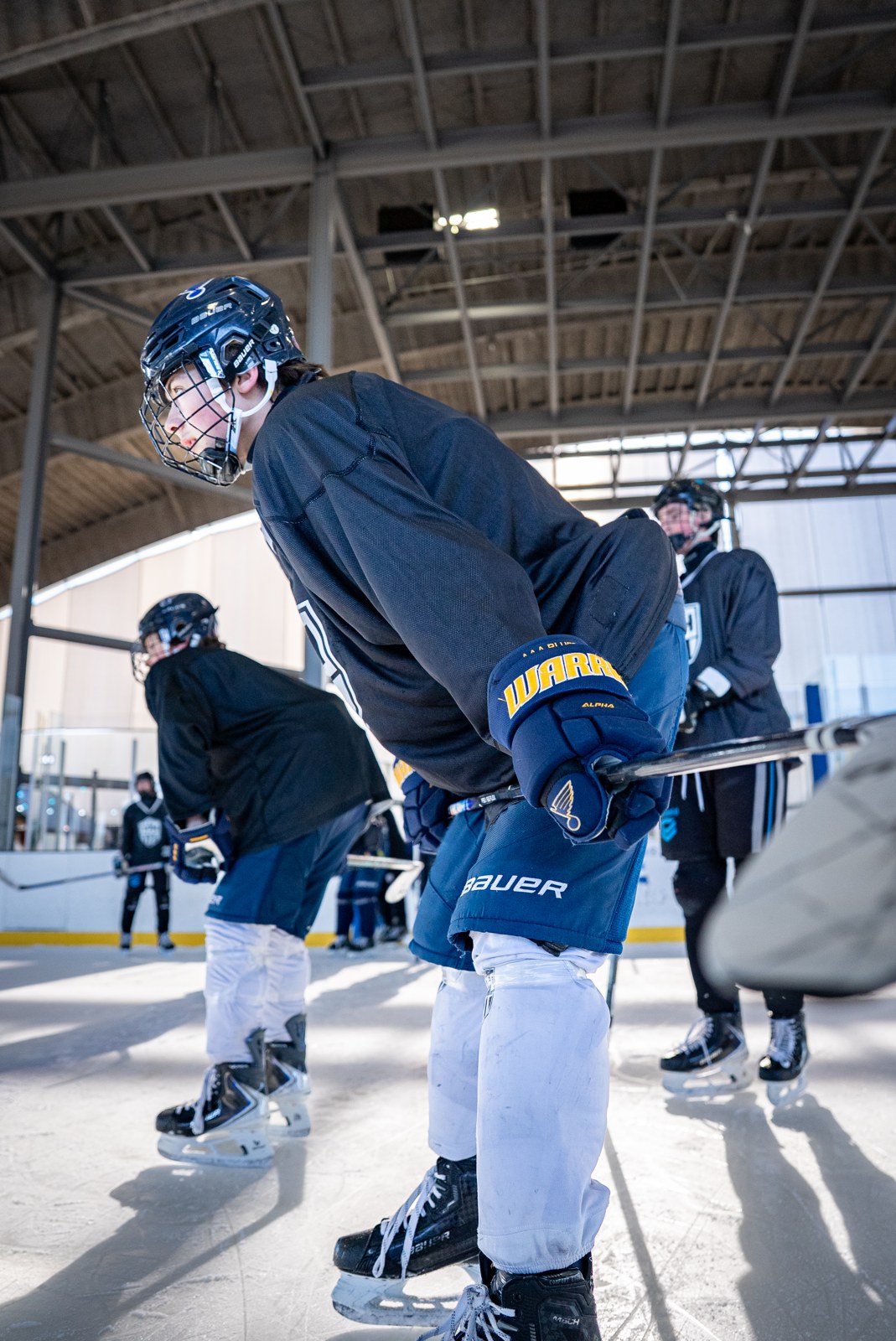
Training Groups
Training groups named for St. Louis Blues greats — Steen, O'Reilly, Perron, and Tkachuk — rotating through academics, ice, and gym every morning.
Built On
Hockey IQ, puck control, decision making, ability to process the game, overall skill level, and development fit.
Not Built On
Club team, outside level, age, or grade. Players train where they'll develop best — period.
Girls Development
A dedicated girls hockey program — detailed below.
Girls Hockey at TPH St. Louis
Our female student-athletes train, study, and are mentored by a coach who lived the Division I pathway they're pursuing.
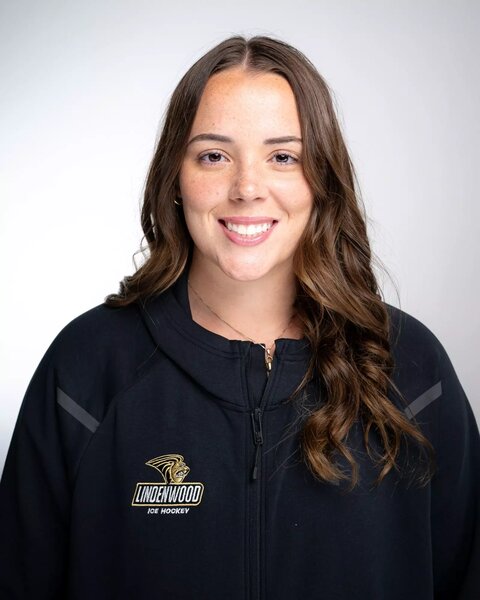 HEAD OF GIRLS HOCKEY DEVELOPMENT & ACADEMIC ASSISTANCE
Josey Dunne Weeks
Former NCAA Division I defenseman — began her college career at the University of Minnesota before transferring home to the Lindenwood Lions, where she served as captain while completing her MBA. O'Fallon, Missouri native and former captain of the Chicago Mission.
Why It Matters for Your Daughter
Josey has lived the exact pathway our female student-athletes are pursuing — elite Tier I club hockey, national-level competition, and Division I college hockey. She provides on-ice development, classroom support, and daily mentorship built specifically for girls in the program — and our girls train inside the only facility in the world that is also home to NCAA Division I women's hockey and Tier I AAA girls hockey.
Girls in the academy have advanced to NCAA programs, and our reigning Impact Player of the Year nominee class included female student-athletes leading through discipline, consistency, and mentorship of younger girls.
Video & Mentorship
Development doesn't stop at the boards — understanding the game and building the person are part of every week.
Video Development Session
Every Wednesday at the 8:10 AM morning bell, a video development session led by Head of Hockey Sam Canfield. Students learn the what, why, and how of a particular skill, concept, or habit — and see exactly how it's used at the highest level. Understanding WHY it's important to learn and HOW it's executed at a high level is what turns repetition into intelligence.
Coach Bopp Mentorship Program
Students can sign up for half-hour one-on-one slots with Coach Stephen Bopp during afternoon academic blocks — to review video, talk nutrition, rest and recovery, training, mindset, or anything on their mind. Just like on- and off-ice training, students must be academically eligible to sign up — and are expected to come prepared and engaged.
Goalie Development
Coach Racine is on site with goalies 10 days a month — powered by RGA.
Dedicated Goalie Days
Every Monday and Tuesday and every other Wednesday, 8:00 AM–12:00 PM — a check-in with the goalies, goalie-specific warm-up, hand-eye work, video or mentorship, and a full on-ice training session before facing shots from players.
Professional Goalie Staff
Led by Bruce Racine with RGA goalie coaches Alex Weissenborn and Wyatt Sloan — structured, position-specific development and regular player feedback.
Between RGA Days
Technique, form, good habits, body language, and work ethic — the standards don't take days off.
"Brandon has become a more confident and stronger player due to TPH. Transferring from a town with its own elite hockey school and program, TPH offered him the ability to continue his personal development at a high level."
Michael Vislay • TPH St. Louis Hockey Parent of Brandon
Advancement Pathways
Results follow environment and structure. Every student-athlete's path is different — development is not one-size-fits-all.
Our students have advanced to the USHL, OHL, WHL, BCHL, NAHL, and AJHL — and on to NCAA Division I, Division III, and ACHA college hockey. High-level advancement starts with daily habits: structure, accountability, consistency, and long-term growth.
Recent Advancement Highlights
Trey Wilson
2020 – Current
Drafted USHL Phase I (Fargo) & NAHL Round 3 (Bismarck) • 2025–26 TPH Academy Impact Player of the Year
Charlie Barnes
2024 – Current
Signed WHL Everett Silvertips • drafted USHL Phase I & NAHL • Tier I 16U Nationals All-Tournament Team
Landon Jackman
2022 – Current
Drafted 1st-round USHL & 2nd-round OHL • OHL games with Owen Sound • committed to Quinnipiac (NCAA D1)
Ethan Piercy
2020 – 2026
Six-year student-athlete • USHL All-Rookie Second Team • committed to Lindenwood (NCAA D1)
Jackson Fox
2020 – 22 & 2025 – 26
Drafted USHL Phase II (Cedar Rapids) • NAHL Fairbanks tender • committed to Augustana (NCAA D1)
Cruz Martin
2023 – 2026
NAHL to USHL call-up, Green Bay • 2025–26 USHL All-Academic Team
Jake McDonald
2020 – 2026
Signed with the BCHL's Blackfalds Bulldogs • AJHL & BCHL games played
Brady Walters
2020 – 2026
Signed with the BCHL's Salmon Arm Silverbacks • NAHL games with Danbury
Taylor Wensink
2020 – 2025
University of Utah (ACHA)
Hannah Grzybowski
2021 – 2025
Curry College — NCAA D3 games played
Apply Today
Enrollment is capped and admission is by application and evaluation. Start with your application — then request a Shadow Day, September through December 10, 2026. Enrollment for 2027–28 is open now and closes April 1, 2027.